
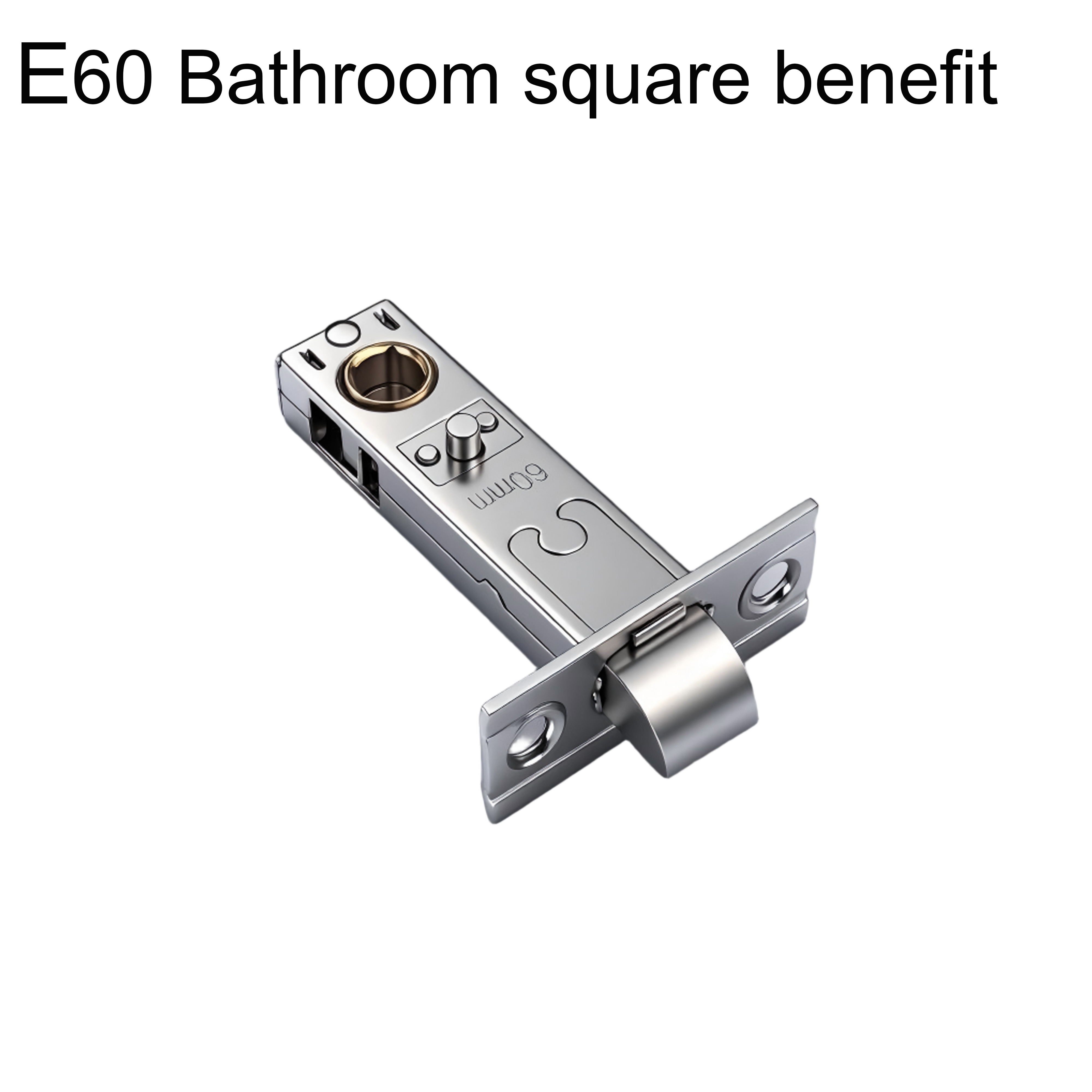
Most door hardware problems start with a type mismatch rather than a quality problem. A mortise lock body will not fit a door that has been prepared for a cylindrical lock, and a channel lock chosen for a timber swing door is simply the wrong product. Getting the family right is the first decision, and it happens before any finish or brand discussion.
Zhongshan Mingwang Hardware has produced mechanical locks, door lock accessories and hardware products since 1999, and the questions we ask a customer at enquiry stage are almost always about door construction and usage rather than about the lock itself. This article sets out the four main mechanical families and where each one belongs.
1. The four mechanical families at a glance
| Type | How it installs | Door preparation | Typical use | Main trade-off |
|---|---|---|---|---|
| Mortise lock | Body set into a pocket cut in the door edge; handle and cylinder mounted through the face | Requires a routed mortise pocket plus face and strike cut-outs | Residential entrance doors, hotel rooms, commercial interior doors | Highest security and best durability, but the most demanding door preparation |
| Cylindrical lock | Single unit bored through the door face with a cross-bore for the latch | Two bores only — simplest preparation | Interior doors, retrofit, light commercial | Fast to install and retrofit, but limited load capacity on heavy doors |
| Channel lock | Mechanism carried in a narrow channel along the door edge or frame | Channel routed into the frame or door leaf | Sliding doors, aluminium-framed doors, glass doors | Purpose-built for sliding geometry; not intended for swing doors |
| Magnetic latch | Latch held by magnetic attraction rather than a sprung bolt | Similar to a standard mortise or cylindrical cut-out | Bathroom and interior doors, quiet-close environments | Near-silent operation and low wear; requires correct strike alignment |
2. Mortise locks: the specification that matters most is not the lock
A mortise lock is only as good as the pocket it sits in. Three dimensions decide whether a body will fit and function:
- Backset — the distance from the door edge to the centre of the handle spindle and cylinder. Common values differ between regions, and a body with the wrong backset cannot be made to work by adjustment.
- Case height and depth — determined by the lock case, which must be routed cleanly and to consistent depth.
- Faceplate and strike dimensions — must match the cut-outs, including screw hole centres.
Mortise locks are the preferred choice where a door will be used heavily, because the lock case is mechanically protected inside the door and the load from the handle is carried by the case rather than by a single through-bore. For entrance doors, a mortise body combined with a security cylinder is the conventional specification.
3. Cylindrical locks: the retrofit and interior workhorse
The cylindrical lock is the fastest to install and the easiest to replace, because the door needs only two bores. It suits interior doors and retrofit projects where the door already exists and re-machining is undesirable.
Its limits are structural rather than functional: the entire mechanism passes through the door leaf, so the load path is a single bore rather than a seated case. On a heavy or high-traffic door, that translates into earlier loosening and more frequent adjustment. Where a cylindrical lock is used on a commercial door, specify a heavy-duty grade and confirm the door weight it is rated for.
4. Channel locks: designed for sliding geometry
Sliding doors cannot use a swing-door latch, because the closing motion is lateral. A channel lock carries the mechanism in a narrow housing along the door edge or in the frame, with a hook or roller that engages the strike as the door slides shut.
Three things to confirm before ordering a channel lock:
- Frame material and profile — aluminium, uPVC and timber take different fixings and housing depths.
- Channel width and depth available — the housing must fit without weakening the frame.
- Which leaf carries the mechanism — and whether the door slides into a pocket or across a face.
5. Magnetic latches: quiet operation, different failure mode
A magnetic latch uses attraction between the latch and the strike instead of a spring-loaded bolt. There is no bolt sliding across the strike plate on every closing cycle, so operation is almost silent and mechanical wear is far lower — which is why the type is common on bathroom and bedroom doors, and in hotels where closing noise matters.
The trade-off is that alignment matters more. Because holding force drops sharply with the gap between latch and strike, a door that has dropped slightly on its hinges can begin to pop open. A magnetic latch needs the strike positioned accurately and the door hung without sag.
6. A selection sequence that avoids rework
- Door swing or slide? Swing doors: mortise, cylindrical or magnetic. Sliding: channel.
- Door construction and thickness? This eliminates bodies that physically will not fit.
- Security requirement? Entrance and commercial doors point to mortise; interior convenience doors allow cylindrical or magnetic.
- Traffic and duty cycle? High traffic favours a seated lock case over a through-bore.
- Handing and backset — confirm both before production, as they cannot be corrected at installation.
Specify the type first, then the product
Zhongshan Mingwang Hardware manufactures mechanical locks, door lock accessories and hardware products in Xiaolan Town, Zhongshan — the core of China's hardware supply chain — and has supplied residential, commercial and custom projects since 1999 under an ISO 9001:2015 quality management system. If you are unsure which family suits a project, send us the door construction, thickness, swing direction and usage, and our engineers will recommend a type and provide samples for evaluation.